
Car Won't Start in DeLand? What the Sound Tells You
The key turns and nothing happens the way it should. The car has already told you most of what you need to know. A no-start is not one problem, it is six problems sharing a symptom, and the sound your car makes in the first two seconds separates them better than any guess about the battery. Here is how to read your own car when it won't start, in a driveway off Woodland Boulevard or a lot near Stetson, and where the line sits between a roadside fix and a tow.
Key Takeaways
- Rapid clicking when you turn the key points at low voltage or a bad connection, not at a failed starter.
- A single loud click followed by silence usually means the solenoid engaged but the starter motor never turned.
- An engine that cranks normally and never catches has plenty of power, so the fault is fuel, spark, or a sensor.
- Silence with a fully lit dashboard is more often a safety interlock than a broken part.
- Interstate Batteries puts typical car battery life at three to five years and says heat above 90 degrees degrades the chemistry holding the charge.
- A successful jump proves the starting circuit works, but not whether the battery, the alternator, or a drain emptied it.
Start by Listening: Four Sounds, Four Different Problems
The sound your car makes when you turn the key is the most useful diagnostic you have, and it is free. Every no-start falls into one of four audio categories, and each rules out most of the list. Rapid clicking means the starter is trying and failing for lack of current. One loud click means current arrived but the motor did not turn. Steady cranking that never becomes running means the engine spins but something it needs to fire is missing. Silence means the starter never got the signal. Do it deliberately: switch off the radio, air conditioning and headlights, turn the key to run, then turn it the rest of the way and listen. Watch the dashboard at the same moment, because lights that stay bright, lights that dim hard, and lights that never come on are three different stories.
Rapid Clicking Is a Voltage Problem Before It Is a Parts Problem
Rapid clicking, a fast chatter rather than a single clunk, means the solenoid has enough voltage to pull in but not to hold, so it snaps in and out several times a second. Check the connection first. A crusty white or green deposit around a battery post is corrosion, and Interstate Batteries notes that corrosion causes electrical resistance and the voltage drops that follow. A healthy battery can still fail to start a car through a packed terminal, and a clamp you can rock by hand does the same. If the posts are clean and tight, the battery is the suspect. Interstate puts normal parasitic draw at 20 to 50 milliamps with the engine off, enough to flatten a weak battery over a long parking stretch. Ask its age before buying anything: a battery in its fifth Florida summer is at the end of a normal life.
One Loud Click and Nothing Else Points at the Starter
A single heavy click then silence usually means the solenoid engaged but the starter motor did not turn. The dash stays bright and the headlights hold steady, and that combination separates a starter from a battery, because a dying battery almost never leaves the lights strong. Starters fail two ways: the motor stops turning under load, or the drive gear fails to engage the flywheel. Both produce the same one-click result. There is an old trick of tapping the starter housing to jar a stuck motor into turning, and when it works it tells you something useful, because a starter that needs to be hit will strand you somewhere worse. Treat a successful tap as permission to drive straight to a shop. A starter sits low on the engine, usually under the exhaust, which makes replacing it a lift-and-tools job, not a curbside one.
Cranking Without Catching Moves the Problem Past the Battery
If the engine spins at normal speed and never fires, the battery and starter are both doing their jobs, and the fault has moved downstream to fuel, spark, or the sensors that time them. Listen for the fuel pump first: with the doors closed and the radio off, turn the key to run without cranking and listen for a short hum from the rear of the car. No hum can mean a failed pump, a blown fuse, or a dead relay. Fuel pumps are a recall item often enough to be worth checking: NHTSA lets any owner enter a 17-character VIN and see unrepaired safety recalls on that specific vehicle, and a manufacturer must repair a recalled part free of charge. Beyond fuel, a failed crankshaft or camshaft position sensor lets an engine crank all day without ever being told when to fire, and that is a scan-tool diagnosis, not a driveway one.
Silence With a Lit Dashboard Usually Means a Lockout
Complete silence with a fully lit dashboard is often not a failure at all. Cars refuse to start unless several conditions are met, and a slipped condition is more common than a broken part. Start with the transmission, because federal rules require these interlocks: under FMVSS 114, vehicles built after September 1, 2010 must require the service brake to be depressed before the transmission can shift out of park, and the same standard governs the key-and-park relationship that stops a car starting in gear. A selector resting a hair out of park reads as unsafe, so shift firmly into park, then neutral, and try each. Then look at the key. A smart fob with a flat coin cell can still unlock the doors yet fail to authorize a start; holding it against the marked spot on the column or start button is the manufacturer's workaround. A security light blinking after you turn the key means the car does not recognize the key.
A Jump Start Proves Less Than People Assume
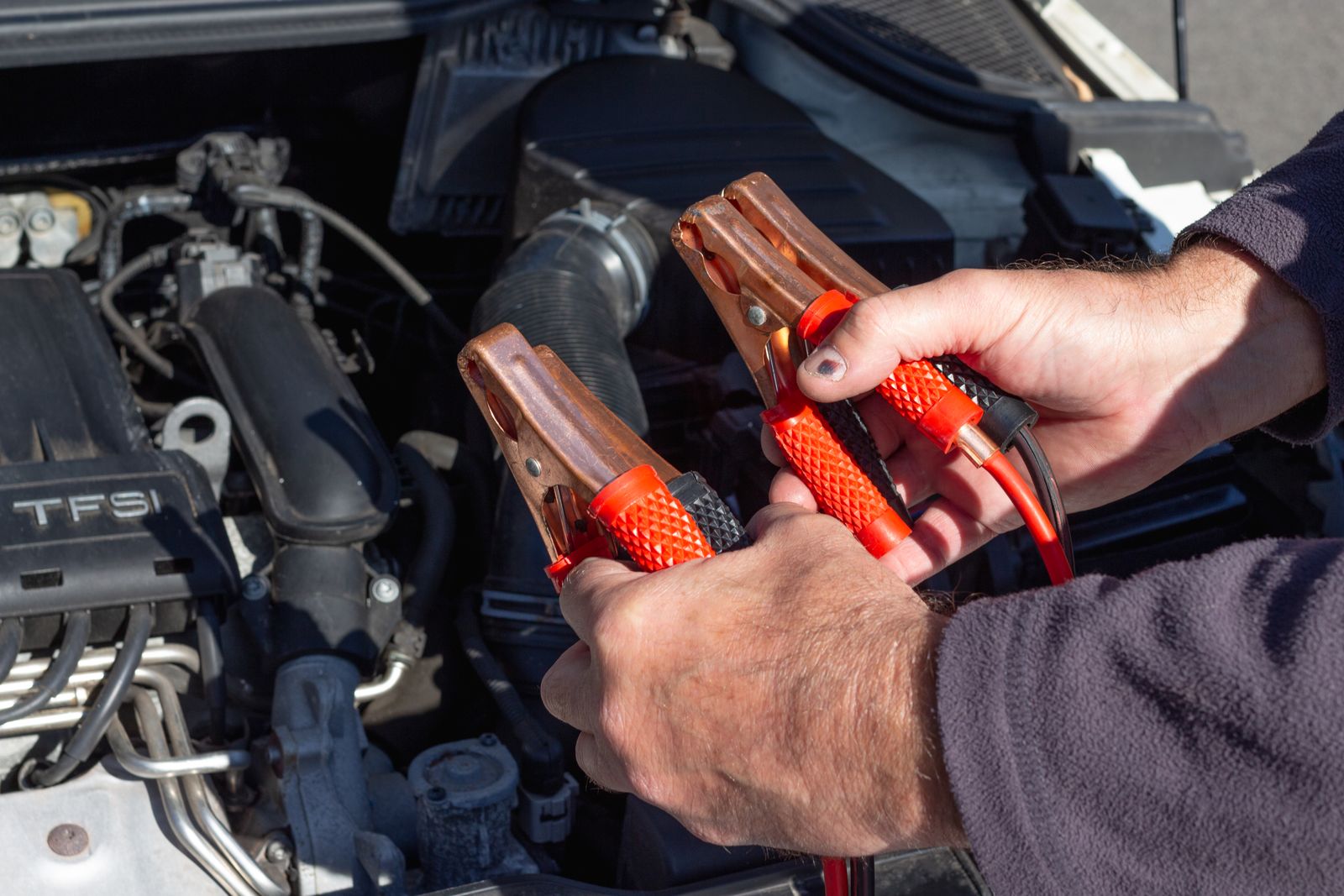
A successful jump start proves one thing: with enough current, the starting circuit works end to end. It does not tell you why your battery could not supply that current. A car that jumps and runs could have a flat battery, a failing alternator, a parasitic drain, or a battery too old to hold a charge, and all four jump identically. The alternator hides here, because its job is to recharge the battery while the engine runs. A car that starts on a jump and dies a few miles later, or a battery light that appears while the engine is running, points at the charging system. Jump-starting deserves respect as a procedure, because a lead-acid battery vents hydrogen while it charges and OSHA's battery standard requires ventilation to prevent the accumulation of an explosive mixture. Skip the cables entirely if the case is swollen, cracked or leaking.
Where a No-Start Stops Being a Roadside Fix
A no-start becomes a tow when the repair cannot happen where the car sits. A crank-no-start is the clearest case, because fuel, spark and sensor faults need a scan tool and usually a lift. A confirmed starter failure is second. A charging-system failure is third, since a jump buys only the minutes the battery holds, and losing the engine mid-route also costs power steering and brake assist. Location overrides all three: a car that won't start in a driveway can wait, but the same car stopped in a travel lane on US-17/92 or along SR-44 is a hazard first and a repair second. There is a local version of this. Stetson's calendar leaves student cars parked for weeks, and Interstate warns that even a few hours sitting fully drained causes permanent sulfation damage, so a car that sat through a long break and now clicks is often a battery that will not come back on a jump. That is when roadside assistance or emergency towing from DeLand Towing Service is the faster answer.
Read the symptom, then let us handle the rest
Tell a DeLand dispatcher what you heard when you turned the key and where the car is sitting, and we will bring either a jump pack or a truck.
No-Start Questions DeLand Drivers Ask
Why does my car click but not start?
Rapid clicking almost always means the starter is not getting enough current, not that it has failed. The usual causes are a discharged battery and a corroded or loose terminal that cannot carry the load. If the posts are clean and tight, the battery is the suspect, especially past four years.
Can a car with a bad alternator still start?
Yes, which is what makes an alternator easy to misread. A healthy battery starts the engine normally even with a dead alternator, then goes flat as the car runs without being recharged. The giveaway is a car that starts on a jump and dies a short drive later, or a battery light that appears while the engine runs.
My dashboard lights up but nothing happens. What does that mean?
Full dash lights with no crank usually points at a safety interlock rather than a failed part. Shift firmly into park, try neutral, and press the brake pedal fully before turning the key. If a smart fob's coin cell is flat, hold the fob against the marked spot on the column or start button.
Should I jump start my car or have it towed?
Jump it when the symptom is clicking or slow cranking and the battery looks undamaged. Have it towed when the engine cranks but never catches, when a single click suggests the starter, when the battery case is swollen or leaking, or when the car sits anywhere traffic is moving. A jump cannot fix a fuel, spark or starter fault.
Still Silent After the Second Try?
Describe the sound, the dash lights and your location, and a local driver will arrive with the right fix for a no-start, whether that is a jump at the curb or a flatbed to your shop.
(386) 845-3790 Call (386) 845-3790