
Car Stalled in Flood Water Near DeLand? Here Is What to Do
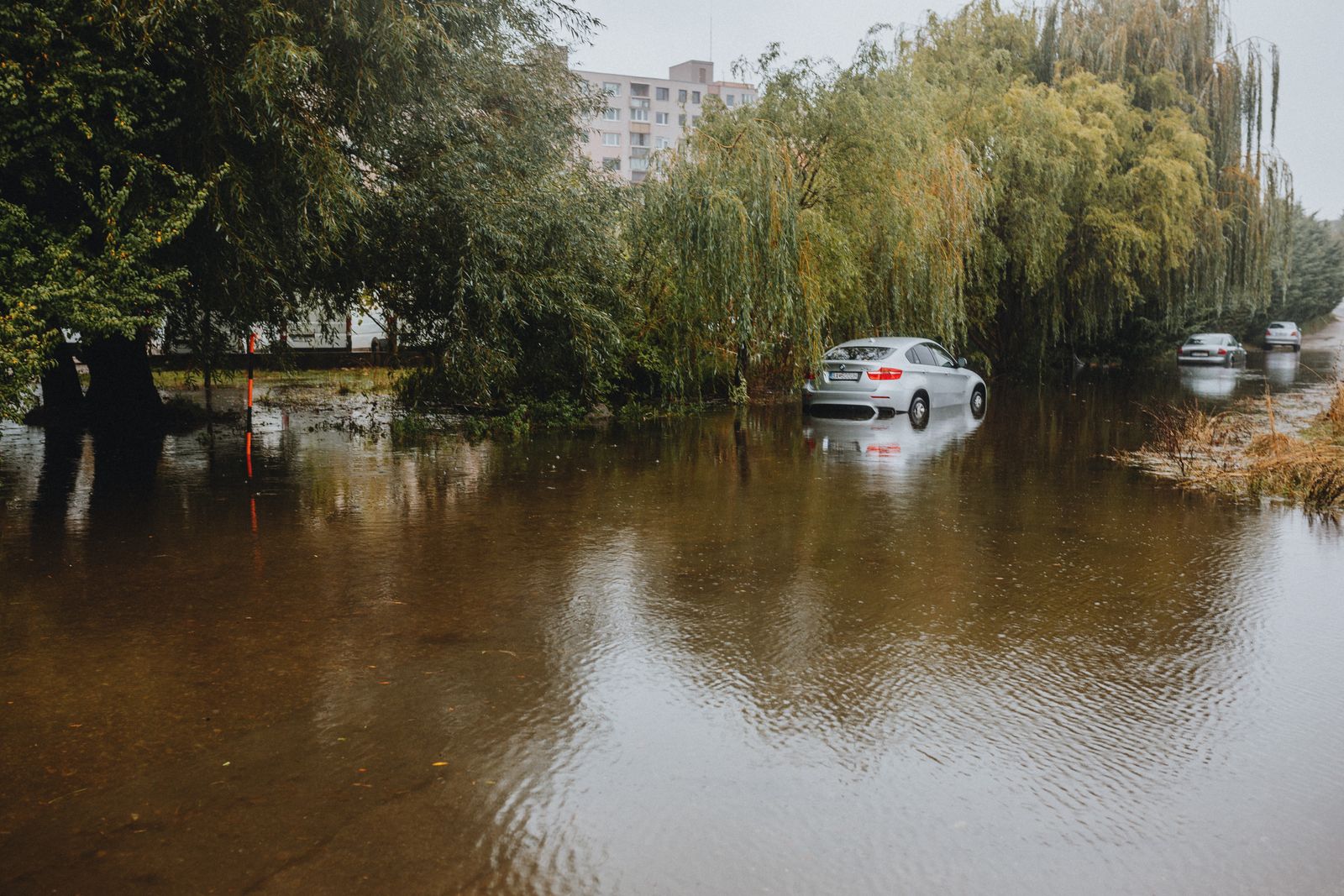
The National Weather Service puts the number at twelve inches: that is all the moving water it takes to carry away most cars, and two feet will move an SUV or a pickup. Those depths look like nothing from the driver's seat, which is exactly the problem. If your car stalls in flood water near DeLand, the decisions that matter come in a particular order, and most of them are about you rather than the vehicle.
How much water does it take to stall or float a car?
Far less than most drivers assume. The National Weather Service puts six inches of fast-moving water at enough to knock over an adult on foot, twelve inches at enough to carry away most cars, and two feet at enough to move SUVs and pickups. The same agency cites Centers for Disease Control and Prevention figures showing that more than half of all flood-related drownings happen when a vehicle is driven into hazardous flood water. Standing water on a road hides everything underneath it, so depth judged from behind the windshield is a guess, and at night on an unlit road in west Volusia it is barely that. Water that is only ankle deep at the edge of the pavement can be over the axles in the middle where the road crowns away.
Should you try to restart a car that has stalled in water?
No, and this is the single most expensive mistake available to you in that moment. An engine that has drawn water into the intake will not compress it, and cranking the starter is what turns a wet but repairable engine into bent connecting rods and a replacement bill. Take the key out, or leave the push-button system off, and do not keep trying. The same logic applies to the electrical system: repeatedly cycling power in a car whose wiring harness and control modules are sitting in water invites more damage than it fixes. The car has already stopped, nothing you do with the ignition improves the outcome, and every attempt narrows what a shop can save later.
Do you stay in the car or get out?
It depends on whether the water is rising and whether it is moving, and you should decide quickly rather than wait and see. If the water is climbing or has any current to it, get out and move to higher ground on foot while you still can, ideally before it reaches the door sills, because water pressure against the doors makes them progressively harder to open. If the water is shallow, still, and clearly not rising, staying belted in with the hazard lights on is usually safer than wading through water that could be hiding a washed-out shoulder or an open drain. If you cannot get out and the water is still coming up, call 911 first and a tow company second. A towing dispatcher cannot get to you faster than fire rescue can.
What should you tell the dispatcher when you call?
Lead with four things: where you are, how deep the water is at the vehicle, whether it is still rising, and whether anyone is still inside. Those details decide whether a truck can reach you at all, because no responsible operator drives a recovery unit into moving water to reach a car. Give a cross street rather than a house number if you are on a residential road, or the mile marker and direction if you are on the interstate. Say whether the car is on pavement or has dropped off into a ditch or soft shoulder, since a vehicle that has slid off the edge needs a controlled winch-out rather than a straight hook-up. Mention it if the vehicle is electric or hybrid, so the crew brings the right equipment and precautions for a submerged high-voltage pack.
Why does west Volusia County flood the way it does?
Because the water arriving here did not necessarily fall here. The United States Geological Survey has operated a river gage on the St. Johns River near DeLand, at the crossing west of town, since 1933, and the drainage area feeding that point covers 3,066 square miles of central Florida. Rain that fell days earlier and dozens of miles upstream is still working its way north through a river system with very little elevation to move it along. That is why roads near the river can sit under water on a bright, dry afternoon, long after the storm that caused it has gone. Add the summer convective storms that drop several inches in an hour onto flat ground that drains slowly, and you get two distinct flooding patterns in the same county: fast street ponding during the storm, and slow river flooding for weeks afterward.
How do you know whether a road is passable before you drive it?
You check before you leave, because you cannot tell from the driver's seat once you are there. FL511 is the Florida Department of Transportation's official traveler information service, free to use, and it carries closures, incidents and camera snapshots for the interstates and major routes across the state. It will not cover every residential street in DeLand, so the second rule matters just as much: never drive around a barricade. A barricade usually means the roadbed under the water has failed, and the reason flooded roads are closed is rarely the water itself. If you arrive at standing water with no barricade and no way to judge it, treat that as a closed road too and turn around.
When does a flooded car need a tow instead of a jump start?
Any time the engine stopped in water, or water reached the door sills and soaked the carpet, the car should be moved on a flatbed rather than restarted and driven. A jump start solves a dead battery, and a car that drowned does not have a battery problem. Moving it with the drivetrain off the ground keeps water out of places it has not reached yet and keeps a possibly compromised braking or electrical system from being tested at speed on a public road. The same call applies to a vehicle that is out of the water but sank into soft ground while getting there, which is a winch-out job. Once the car is somewhere dry, a shop can tell you what is salvageable, and that assessment is far more useful when nobody has tried to drive it first.
What to Remember
- Twelve inches of moving water is enough to carry away most cars, and two feet can move an SUV or pickup, according to the National Weather Service.
- Do not restart an engine that stalled in water; cranking it is what turns a soaking into a destroyed engine.
- Leave the vehicle before water reaches the door sills, because water pressure makes the doors progressively harder to open.
- If water is rising or moving and you cannot get clear safely, call 911 before you call a tow company.
- The USGS river gage near DeLand drains 3,066 square miles, which is why local roads can flood days after the rain has stopped.
- Check FL511, the Florida Department of Transportation's official traveler information service, for closures before driving during or after a storm.
- A car that stopped in water should ride out on a flatbed rather than be jump-started and driven.
If water is moving across the road in front of you, there is no version of this where driving through is the quick option. Back out the way you came and let a truck deal with the car later.
Water where the road should be?
Once you are somewhere dry, call and tell us the cross street and how deep it got. We will send the right equipment.
Flooded Out Near DeLand? Leave the Car to Us.
Get yourself to dry ground first, then call. We recover flooded and stuck vehicles across DeLand and west Volusia County, on a flatbed, at a flat rate quoted before anything moves.
(386) 845-3790 Call (386) 845-3790