
What to Do If Your Car Breaks Down on I-4 Near DeLand
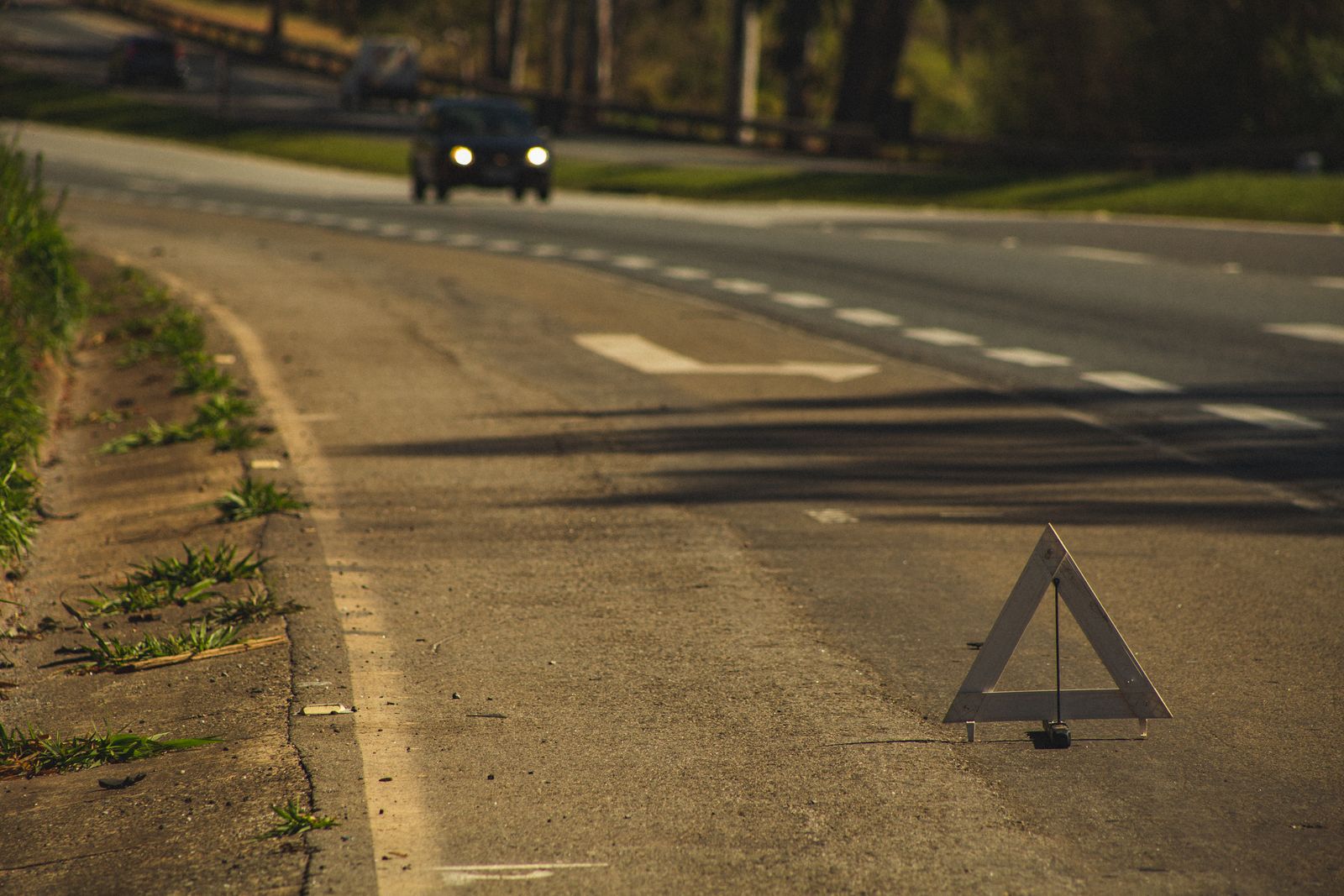
A breakdown on I-4 is a different problem from a breakdown on Woodland Boulevard. Traffic is moving at seventy, the shoulder narrows without warning, and there is no parking lot to coast into. If your car breaks down on I-4 near DeLand, the first two minutes decide how safe the next hour is. Here is the order to work in, based on what Florida law actually requires and what keeps drivers out of harm's way.
Step 1: Get the Car Out of the Travel Lane
Your first move is to steer the vehicle onto the right shoulder or past the nearest exit ramp, not to work out what went wrong. Florida Statute 316.071 puts that duty on the driver: a disabled vehicle has to be moved so it does not obstruct the regular flow of traffic, and failing to do so is a nonmoving violation. When an engine quits at highway speed you usually have several hundred feet of momentum left, so spend it aiming right rather than trying to restart. The right shoulder is almost always the better choice on I-4 because it is wider, it keeps you on the exit side of the highway, and a tow operator can work from it without standing in a live lane.
Step 2: Hazards On, Belts On, Doors Closed
Hit the hazard lights before the car has finished rolling to a stop, then leave everyone belted in with the doors shut. Hazards do two separate jobs: they make a stopped car readable to drivers closing at seventy, and they switch on the legal protection described in Step 6. The instinct to climb out and look under the hood is the one worth fighting, because standing beside a car on an interstate shoulder is the most exposed position most drivers will ever be in. If you truly have to get out, leave through the passenger-side doors and move behind the guardrail, well back from the vehicle, never into the gap between your bumper and traffic.
Step 3: Pin Down Where You Actually Are
The fastest way to describe your position on I-4 is the mile marker plus your direction of travel. Small green markers sit at every mile on the right shoulder, and that pair of details tells a dispatcher which side of a divided highway to send a truck to. If no marker is visible from where you stopped, name the last exit you passed. Through west Volusia the exits run Exit 108 (DeBary Avenue / Dirksen Road), Exit 111 (Saxon Boulevard), Exit 114 (SR 472), Exit 116 (Orange Camp Road) and Exit 118 (SR 44), according to the exit list published by the Florida Department of Transportation. Orange Camp Road and SR 44 are the two that drop you straight into DeLand.
Step 4: Call *347 for a Road Ranger if the Problem Is Small
Florida runs a free highway assistance patrol, and on I-4 it is worth knowing the number: dial *347 from a mobile phone to reach a Road Ranger. The program is funded by the Florida Department of Transportation, and its crews change flat tires, jump-start vehicles, make minor repairs, supply emergency fuel or water, clear debris, and move disabled vehicles out of travel lanes. FDOT reports the patrol has logged more than 6.1 million service assists since it began in 2000. What Road Rangers do not do is haul your car to a shop or a driveway, so treat them as the fix for a problem that ends at the roadside.
Step 5: Call a Tow the Moment the Car Will Not Drive
A tow is the right call as soon as the vehicle cannot move safely under its own power: a seized engine, a transmission that will not engage, a cooling system that has let go, collision damage, or a flat with no usable spare. It is also the right call when the shoulder itself is the problem, on a narrow stretch, a blind curve, or a spot where passing traffic is close enough to rock the car. When you call, lead with the mile marker and direction, then the make, model and drivetrain. That last detail matters more than people expect, because an all-wheel-drive crossover or a lowered car needs a flatbed rather than a wheel-lift if the drivetrain and bumpers are going to survive the trip.
Step 6: Know What the Move Over Law Does for You
Florida's Move Over Act protects you while you sit on the shoulder, not only the responders who come to help. Under Florida Statute 316.126, drivers approaching a disabled vehicle that is displaying warning or hazard lights, using flares or emergency signage, or with a person visibly present must vacate the lane closest to it as soon as it is safe on a multi-lane road such as I-4. Where that move cannot be made safely, or on a two-lane road such as SR 44 or Kepler Road, they must slow to twenty miles per hour below the posted limit. A violation is a noncriminal traffic infraction. Treat the law as a layer of protection rather than a guarantee, and keep the body of your car between you and moving traffic.
Step 7: What Makes This Stretch of I-4 Its Own Problem
The west Volusia County run of I-4 is quieter than the Orlando corridor, and that cuts both ways. Exits sit three to four miles apart between DeBary and DeLand, so a breakdown can leave you a long way from anything useful, with no shopping center entrance to coast into. Summer afternoons bring the thunderstorms Central Florida is known for, which drop visibility in minutes and leave the ground beside the pavement soft for hours afterward. A car that slides off the shoulder into that soft ground usually needs a controlled winch-out rather than a straight hook-up, which is different equipment and worth mentioning on the phone.
Key Takeaways
- Florida Statute 316.071 requires a driver to move a disabled vehicle out of the regular flow of traffic; failing to do so is a nonmoving violation.
- Switch on the hazard lights immediately and stay belted inside the vehicle unless leaving it is clearly safer.
- Dial *347 from a mobile phone for a free FDOT Road Ranger, who can change a tire, jump a battery or drop emergency fuel.
- The two I-4 exits that lead straight into DeLand are Exit 116 (Orange Camp Road) and Exit 118 (SR 44).
- Give the mile marker and your direction of travel when you call, because that is what tells a driver which side of the divided highway to take.
- Florida's Move Over Act covers disabled vehicles showing hazard lights: approaching drivers must change lanes or slow to 20 mph under the posted limit.
- All-wheel-drive and lowered vehicles should ride on a flatbed so the drivetrain and bodywork are not damaged in transit.
If you are reading this while standing outside your car on the I-4 shoulder, get back in, buckle up and make the call from inside. Nothing under the hood is worth that exposure.
Sitting on the I-4 shoulder right now?
Give us your mile marker and direction of travel and a licensed DeLand driver starts toward you.
Broken Down on I-4? Put a Licensed DeLand Driver on the Way.
Stay belted in with your hazards on and let a properly equipped local crew handle the shoulder. We confirm your location, quote the flat rate before anything moves, and dispatch from inside the DeLand area.
(386) 845-3790 Call (386) 845-3790